"If one has a dream, he/she must work hard in pursuing to attain it", do you believe in this? I guess many of us will agree! Even Arnel Casanova believed this goal! However, not all dreams are worth pursuing. Why do I say that. There are certain aspects of a dream that a dreamer should look into consideration. And foremost of it is the MOTIVE or intention. Is one's motive self-serving or for the betterment of others? If you pick on the former, then I say, forget about that dream!
Am I too harsh? Nope! I just really hate seeing individuals being blinded by this 'self-serving' dream. So if BCDA president Arnel Casanova is bent on pursuing his 'dream' at Camp John Hay -- I say it again, FORGET about this dream Arnel Casanova !!!
“The Arbitral Award of the PDRCI ordered CJHDEVCO to return to BCDA the Camp upon return to CJHDEVCO of the P7.4 billion rentals paid by CJHDEVCO” Mr. Casanova, is this hard for you understand? I guess for a self-centered man like you with a 'self-serving' dream --this is a hard pill to swallow!
BCDA's latest attempt not to pay CJHDEVCO P1.4 billion is another dirty trick to dupe the locators, lessees and tenants inside the camp that you care for their welfare.
After all, you just wanted those investors and owners be evicted and let CJHDEVCO shoulder the costs of said eviction. Wow! such a wily plan, "Iwas bayad ang BCDA". Mr. Arnel Casanova, you're a sick, crooked man. You still are in hot pursuit to pin down and get even with Bob Sobrepena. You are such a big bully - good at doing dirty tactics to intimidate your opponents.
Furthermore, you're a big liar - good at misleading residents and locators to turn over their investments in Camp John Hay. You are instilling in their minds that CJHDevCo is the villain and you the Knight in Shining Armor who will aid them. These people may be helpless, but not dumb enough to know that if worst come to worst, it is BCDA that they will sue. They all know that their (third party) investments are safe since the decision said so.
CJHDevCo respect the decision and even going to the extent of providing all locators, lessees and tenants legal services just to protect their rights.
And what is BCDA doing? The 5-page contract you've presented the investors and tenants is full of harassing tactics to ensure that they sided with your whims. The new contract is 'Take it or Leave it' one where graft and corruption has a big chance to sink in.
I say, Mr. Casanova, your pathetic plan of spreading chaos in Camp John Hay will Not Work Out! Sooner or Later, the law will catch up with you! It is best for you to just respect the decision of the court and look at the welfare of the third parties to avoid trouble.
Tuesday, April 7, 2015
Friday, March 27, 2015
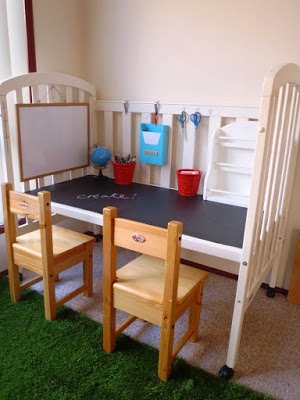
Awesome Recycling Idea To Declutter Your Home - Turn an Old Crib into a Table
Let's admit it; we all love to keep old items just because they have a sentimental value that we can't let go of. While we'd love to keep them, they sometimes turn into clutter which takes up space, so instead of keeping them stashed in your closet, why not recycle your old items and turn them into functional pieces for your home. Here how you turn your old crib into a table!
photo link
For this project, you need the expertise of your trusted carpenter. Once done, you may place this piece in your kids' study area or bedroom. Learn how to do it here.
Materials needed:
* old baby crib with a removable drop side
* mdf/particle board cut to mattress size
* blackboard paint
Our drop side had already been removed so all I had to do was adjust the base to the highest newborn setting.
I cut two sheets of thick mdf to fit snugly into the mattress base to provide a table top. I deliberately chose thick strong board to strengthen the desk should any small people climb, sit or stand on it (inevitable in this house).
The boards were painted with blackboard paint to create a chalkboard table top.
photo link
It was then easy to use hooks and suction hooks to create storage on the cot sides. I'd love to attach some small shelves for colouring books too.
The paper storage box is made from an empty muesli box, I cut the front to make the paper accessible then primed and painted it before super gluing it to a thick piece of card for extra strength.
photo link
On the left hand side we hung Bubble's whiteboard for doing her therapy homework using 3M removable hooks. The white shelves are a spice rack bought from the local Salvo shop for $5 and repainted, this is where we will store our small craft items like glue pots and beads.
photo link
photo link
photo link
For this project, you need the expertise of your trusted carpenter. Once done, you may place this piece in your kids' study area or bedroom. Learn how to do it here.
Materials needed:
* old baby crib with a removable drop side
* mdf/particle board cut to mattress size
* blackboard paint
Our drop side had already been removed so all I had to do was adjust the base to the highest newborn setting.
I cut two sheets of thick mdf to fit snugly into the mattress base to provide a table top. I deliberately chose thick strong board to strengthen the desk should any small people climb, sit or stand on it (inevitable in this house).
The boards were painted with blackboard paint to create a chalkboard table top.
photo link
It was then easy to use hooks and suction hooks to create storage on the cot sides. I'd love to attach some small shelves for colouring books too.
The paper storage box is made from an empty muesli box, I cut the front to make the paper accessible then primed and painted it before super gluing it to a thick piece of card for extra strength.
photo link
On the left hand side we hung Bubble's whiteboard for doing her therapy homework using 3M removable hooks. The white shelves are a spice rack bought from the local Salvo shop for $5 and repainted, this is where we will store our small craft items like glue pots and beads.
photo link
photo link
Tuesday, March 10, 2015
10 Affordable Essentials for an Organized Closet
The best way to solve the daily dilemma of putting together an outfit is to see every article of clothing that you own. This way, nothing gets pushed to the corner or gets buried under a pile of shirts and jeans -- you will instantly find whatever it is you need. To make dressing up an easy, enjoyable part of your daily ritual, here are 10 closet essentials.
photo link
Wooden or foam-padded hangers
Experts recommend these pieces to prevent creases on the shoulders of your shirts. Hangers of the same color and style also look better than gaudy, mismatched ones.
Hooks
Install hooks for belts, ties, and other accessories. Experts say that these can be attached to the back of a closet door.
Lights
They explain that general lighting is not enough because it does not illuminate the inside of the cabinet. It can also cast a shadow when you are browsing through your clothes. Install lights inside the cabinet to help you see your belongings better.
Fabric softener sheets
These will keep your clothes fresh and fragrant. Experts say you can tuck them in between garments.
Shoe racks
Many room look messy because shoes are left out on the open and on the floor. Improve your space by investing in organizers for all of your pairs.
Drawers and containers
Clothing articles (such as undergarments) and various accessories should be arranged neatly. Choose matching storage boxes for your prized possessions.
Full-length mirrors
Don't you hate having to jump up and down in front of your bathroom mirror or having to stand on a chair to view your entire outfit? Fritz says that a full-length mirror will give you a whole picture of what you've put together.
Garment bags
Clothes meant for special occasions shouldn't be stored like the rest of your everyday clothes. Some may be made from delicate fabric or may have beadwork that might come loose, so store gowns, barongs, and suits in zip-up garment bags.
Cedar wood blocks
While moth balls keep pests away from your clothes, experts share that they leave a strong chemical odor. Try cedar wood blocks for a warm, subtle smell.
Drawer liners
Although homeowners often don't use drawer liners, one might want to reconsider. Experts say that these protect clothes from snags, especially when the finish of the drawer surface is rough.
photo link
Wooden or foam-padded hangers
Experts recommend these pieces to prevent creases on the shoulders of your shirts. Hangers of the same color and style also look better than gaudy, mismatched ones.
Hooks
Install hooks for belts, ties, and other accessories. Experts say that these can be attached to the back of a closet door.
Lights
They explain that general lighting is not enough because it does not illuminate the inside of the cabinet. It can also cast a shadow when you are browsing through your clothes. Install lights inside the cabinet to help you see your belongings better.
Fabric softener sheets
These will keep your clothes fresh and fragrant. Experts say you can tuck them in between garments.
Shoe racks
Many room look messy because shoes are left out on the open and on the floor. Improve your space by investing in organizers for all of your pairs.
Drawers and containers
Clothing articles (such as undergarments) and various accessories should be arranged neatly. Choose matching storage boxes for your prized possessions.
Full-length mirrors
Don't you hate having to jump up and down in front of your bathroom mirror or having to stand on a chair to view your entire outfit? Fritz says that a full-length mirror will give you a whole picture of what you've put together.
Garment bags
Clothes meant for special occasions shouldn't be stored like the rest of your everyday clothes. Some may be made from delicate fabric or may have beadwork that might come loose, so store gowns, barongs, and suits in zip-up garment bags.
Cedar wood blocks
While moth balls keep pests away from your clothes, experts share that they leave a strong chemical odor. Try cedar wood blocks for a warm, subtle smell.
Drawer liners
Although homeowners often don't use drawer liners, one might want to reconsider. Experts say that these protect clothes from snags, especially when the finish of the drawer surface is rough.
Thursday, February 26, 2015
How to Organize your Bed Linen
We all love pretty things, and bed linen and pillowcases are no exception. In fact, most of us take great care in choosing sheets that aren’t only pretty but also feel wonderful to the touch.
photo link
When you own several sets of bed linen – usually composed of a fitted sheet, a flat sheet, 2 pillowcases, with probably a duvet, too – it can be a challenge to organize them. Here’s one cool idea:
photo link
Fold all the linen into a size that will fit into one of the pillowcases, then use that as their “case”! Martha Stewart suggests, tucking the sheet set inside one of its pillowcases, and then stacking them according to size (twin, full, queen, king) or by the room you use the sheets in (master bedroom, guest room.) Now you won’t need to go through the entire closet anymore just looking for matching sheets and pillowcases!
source:
photo link
When you own several sets of bed linen – usually composed of a fitted sheet, a flat sheet, 2 pillowcases, with probably a duvet, too – it can be a challenge to organize them. Here’s one cool idea:
photo link
Fold all the linen into a size that will fit into one of the pillowcases, then use that as their “case”! Martha Stewart suggests, tucking the sheet set inside one of its pillowcases, and then stacking them according to size (twin, full, queen, king) or by the room you use the sheets in (master bedroom, guest room.) Now you won’t need to go through the entire closet anymore just looking for matching sheets and pillowcases!
source:
Thursday, February 12, 2015
DIY Valentine's Day Decor
Creative projects you can do for your S.O. (even if you're totally un-crafty!)
photo link
Whether you're decorating your space for a V-Day party with friends or you simply want to give your home a hearty upgrade, these projects will surely be worth your while. Here are different handmade decorations that you can do. Just a tip, remember to have some fun and experiment with designs.
photo link
Fluttering Valentine's Day Heart Wreath
Light and airy papers combine by the dozens to create a colorful, handmade Valentine's Day decorating accent. Drape a single wreath on a chair back, or group a trio for a front door welcome.
Expert Tip: Hang the wreath on your front door for a festive vibe.
Here's the step-by-step guide.
Use paper punches or scissors to cut hearts from colored vellum and lightweight decorative papers. Curl the cutout hearts by scraping them between your thumb and a butter knife just as you would with curling ribbon. Then layer the hearts on the cardstock base and attach each heart with a dab of clear-drying glue, either in the center or near one edge. Hang the wreath with ribbon.
source:
photo link
Whether you're decorating your space for a V-Day party with friends or you simply want to give your home a hearty upgrade, these projects will surely be worth your while. Here are different handmade decorations that you can do. Just a tip, remember to have some fun and experiment with designs.
photo link
Fluttering Valentine's Day Heart Wreath
Light and airy papers combine by the dozens to create a colorful, handmade Valentine's Day decorating accent. Drape a single wreath on a chair back, or group a trio for a front door welcome.
Expert Tip: Hang the wreath on your front door for a festive vibe.
Here's the step-by-step guide.
Use paper punches or scissors to cut hearts from colored vellum and lightweight decorative papers. Curl the cutout hearts by scraping them between your thumb and a butter knife just as you would with curling ribbon. Then layer the hearts on the cardstock base and attach each heart with a dab of clear-drying glue, either in the center or near one edge. Hang the wreath with ribbon.
source:
Saturday, February 7, 2015
8 Creative Ideas for Urban Outdoor Spaces
Hving a piece of green space in the city, no matter how small, is something to treasure. But urban outdoor spaces are notorious for being oddly shaped, not so sunny and, yes, small. Here are nine creative ways to work with what you’ve got — whether it’s a tiny balcony or a row-house lot.
1. Trellis-lined gravel path.
Turn a narrow row-house back lot into an enchanting allée by lining the walls with wood trellises and climbing plants. A gravel path is an affordable and chic way to finish the space.
2. Fake grass (yes, really!).
Kinda silly or sort of cool? You decide. But when real grass is not a realistic option, a bit of fake green underfoot can be a cheerful addition to an urban outdoor space.
3. Split-level deck.
Try a deck with a few levels to create the feeling of different zones in a small outdoor space — even a slight shift in height can add a lot of visual interest. Perhaps put seating on one level, a grill on another and leave one open as pass-through space.
4. Linked outdoor rooms.
This Portland, Oregon, backyard packs a lot of living into a modest space. A soaking tub, dining table and fire pit each get a zone, defined by concrete slabs bordered in a mossy ground cover. A maple tree planted near the center of the yard provides shade and a focal point.
5. Urban playground.
Keep active kids busy with a backyard play structure and room to run around. Benches on either side of the yard plus a dining zone provide plenty of places for grown-ups to enjoy too. This yard is already pretty low maintenance.
6. Mini Zen garden.
Simple wood-plank decking is bisected by a “river” of stones and boulders on this courtyard patio. More wood planks mounted on the wall provide organic warmth as well as a place to hang potted plants.
7. Wall garden.
Save floor space in a compact city patio and get your greens too, by installing a wall of planters. Choose succulents for low-maintenance beauty or fill pots with tender lettuces and herbs for an edible urban feast. Tend the plants with a hose extension and keep a ladder handy for when you need to get a closer look at the plants.
8. Rooftop oasis.
A green roof, an outdoor dining zone and weathered wood walkways make this city rooftop equal parts livable and ecofriendly. Clumps of tall grasses and native flowers offer a welcome counterpoint to the tall buildings all around.
source:houzz
1. Trellis-lined gravel path.
Turn a narrow row-house back lot into an enchanting allée by lining the walls with wood trellises and climbing plants. A gravel path is an affordable and chic way to finish the space.
2. Fake grass (yes, really!).
Kinda silly or sort of cool? You decide. But when real grass is not a realistic option, a bit of fake green underfoot can be a cheerful addition to an urban outdoor space.
3. Split-level deck.
Try a deck with a few levels to create the feeling of different zones in a small outdoor space — even a slight shift in height can add a lot of visual interest. Perhaps put seating on one level, a grill on another and leave one open as pass-through space.
4. Linked outdoor rooms.
This Portland, Oregon, backyard packs a lot of living into a modest space. A soaking tub, dining table and fire pit each get a zone, defined by concrete slabs bordered in a mossy ground cover. A maple tree planted near the center of the yard provides shade and a focal point.
5. Urban playground.
Keep active kids busy with a backyard play structure and room to run around. Benches on either side of the yard plus a dining zone provide plenty of places for grown-ups to enjoy too. This yard is already pretty low maintenance.
6. Mini Zen garden.
Simple wood-plank decking is bisected by a “river” of stones and boulders on this courtyard patio. More wood planks mounted on the wall provide organic warmth as well as a place to hang potted plants.
7. Wall garden.
Save floor space in a compact city patio and get your greens too, by installing a wall of planters. Choose succulents for low-maintenance beauty or fill pots with tender lettuces and herbs for an edible urban feast. Tend the plants with a hose extension and keep a ladder handy for when you need to get a closer look at the plants.
8. Rooftop oasis.
A green roof, an outdoor dining zone and weathered wood walkways make this city rooftop equal parts livable and ecofriendly. Clumps of tall grasses and native flowers offer a welcome counterpoint to the tall buildings all around.
source:houzz
Saturday, January 31, 2015
Top 10 Scented Plants for Your Garden
A palette of perfumed plants can transform even the smallest of gardens into a sensory delight
Scent adds an extra dimension to a garden, turning it into a place where you linger, indulging your senses rather than rushing through to the front door or garden shed. Use plants that flower in different seasons to turn your garden into a perfumed paradise all year round. Plant heat-loving shrubs like lavender against north-facing walls and surround them with brick pavers or stone pebbles to draw out their perfume. And position night-scented plants near your outdoor living spaces or windows so that you can savor their scent while relaxing in the evening.
1. Wisteria.
The spectacular scented flowers of wisteria appear in spring on the bare vines, with leaves following soon afterward. Train this climber along pergolas or fences, or keep it trimmed as a shrub. Wisteria will tolerate frost but prefers a sunny spot.
2. Plumeria.
If your idea of heaven is a beach in Fiji, you must plant a plumeria. The exquisite scent of this tropical shrub more than compensates for its lack of leaves in winter. You need a warm, sunny spot for plumeria; pots are best for those in colder areas so that plants can be moved to shelter in winter.
3. Daphne.
Winter-flowering daphne has an unmistakable old-fashioned scent. Partial shade is best for these shrubs, with a free-draining, cool and slightly acidic soil. The flowers range in color from white to pinkish red and lilac.
4. Citrus.
Citrus flowers are sweetly scented, plus there’s the bonus of delicious fruit. Citrus need plenty of moisture and food, particularly from spring until autumn. Most are vulnerable to frost, so plant in pots in cooler regions. The main flowering period is summer, but some citrus varieties, such as Meyer lemon, will flower and fruit virtually all year.
5. Star jasmine.
The hardy, low -maintenance climber star jasmine (Trachelospermum jasminoides) is well behaved. It has glossy dark green leaves and, from midspring to late summer, is covered in deliciously scented white flowers. Star jasmine is tolerant of light to medium frost.
6. Gardenia.
This is a shrub that needs plenty of TLC, but its divine fragrance is well worth the effort. Gardenias prefer fertile, acidic soil, lots of moisture and partial shade. Plenty of compost or other organic matter in the soil is also essential, as is shelter from frost in winter.
7. Lilac.
The sweet, old-fashioned perfume of lilac is rarely found in modern gardens, particularly in warmer areas. But lilacs are still common in traditional gardens in cooler regions. These frost-hardy trees can vary in fragrance, so choose plants when in flower. Lilac prefers a moist soil and will flower well after a hard frost.
8. Spring bulbs.
The sweet scent of freesias (seen here), narcissus and hyacinth reminds us that spring is on its way even when trees are still bare. Freesia grows best in warmer regions, while narcissus and hyacinth are frost tolerant. In small gardens, spring bulbs are best in pots so they can be moved out of sight while the foliage dies back (an essential process to ensure good flowering the following season).
9. Roses.
The scent of a rose is pure joy. However, not all of them suit warmer areas, and many modern hybrids lack fragrance, so select your varieties carefully. English or David Austin roses usually have a good perfume, as do old-fashioned damask roses.
10. Lilies.
Of the many, many lilies you can grow in the garden, hybrids of L. regale and L. longiflorum produce the most beautiful scent. Some of the newer hybrids are less fragrant but easier to grow. You need a rich, well-drained soil and plenty of moisture to grow lilies well, ideally with cool shade around the roots and sun on the flowers. Grow them in pots if your garden doesn’t suit their needs.
Tell us: What are your favorite scented plants? Share your suggestions and pictures in the Comments!
source: houzz
Scent adds an extra dimension to a garden, turning it into a place where you linger, indulging your senses rather than rushing through to the front door or garden shed. Use plants that flower in different seasons to turn your garden into a perfumed paradise all year round. Plant heat-loving shrubs like lavender against north-facing walls and surround them with brick pavers or stone pebbles to draw out their perfume. And position night-scented plants near your outdoor living spaces or windows so that you can savor their scent while relaxing in the evening.
1. Wisteria.
The spectacular scented flowers of wisteria appear in spring on the bare vines, with leaves following soon afterward. Train this climber along pergolas or fences, or keep it trimmed as a shrub. Wisteria will tolerate frost but prefers a sunny spot.
2. Plumeria.
If your idea of heaven is a beach in Fiji, you must plant a plumeria. The exquisite scent of this tropical shrub more than compensates for its lack of leaves in winter. You need a warm, sunny spot for plumeria; pots are best for those in colder areas so that plants can be moved to shelter in winter.
3. Daphne.
Winter-flowering daphne has an unmistakable old-fashioned scent. Partial shade is best for these shrubs, with a free-draining, cool and slightly acidic soil. The flowers range in color from white to pinkish red and lilac.
Traditional Landscape by Santa Barbara Landscape Architects & Landscape Designers Margie Grace - Grace Design Associates
4. Citrus.
Citrus flowers are sweetly scented, plus there’s the bonus of delicious fruit. Citrus need plenty of moisture and food, particularly from spring until autumn. Most are vulnerable to frost, so plant in pots in cooler regions. The main flowering period is summer, but some citrus varieties, such as Meyer lemon, will flower and fruit virtually all year.
5. Star jasmine.
The hardy, low -maintenance climber star jasmine (Trachelospermum jasminoides) is well behaved. It has glossy dark green leaves and, from midspring to late summer, is covered in deliciously scented white flowers. Star jasmine is tolerant of light to medium frost.
6. Gardenia.
This is a shrub that needs plenty of TLC, but its divine fragrance is well worth the effort. Gardenias prefer fertile, acidic soil, lots of moisture and partial shade. Plenty of compost or other organic matter in the soil is also essential, as is shelter from frost in winter.
Traditional Landscape by Guinda Landscape Architects & Landscape Designers Pamela Bateman Garden Design
7. Lilac.
The sweet, old-fashioned perfume of lilac is rarely found in modern gardens, particularly in warmer areas. But lilacs are still common in traditional gardens in cooler regions. These frost-hardy trees can vary in fragrance, so choose plants when in flower. Lilac prefers a moist soil and will flower well after a hard frost.
8. Spring bulbs.
The sweet scent of freesias (seen here), narcissus and hyacinth reminds us that spring is on its way even when trees are still bare. Freesia grows best in warmer regions, while narcissus and hyacinth are frost tolerant. In small gardens, spring bulbs are best in pots so they can be moved out of sight while the foliage dies back (an essential process to ensure good flowering the following season).
Traditional Landscape by Leominster Landscape Architects & Landscape Designers katie moss landscape design
9. Roses.
The scent of a rose is pure joy. However, not all of them suit warmer areas, and many modern hybrids lack fragrance, so select your varieties carefully. English or David Austin roses usually have a good perfume, as do old-fashioned damask roses.
Traditional Landscape by Vancouver Landscape Architects & Landscape Designers Glenna Partridge Garden Design
10. Lilies.
Of the many, many lilies you can grow in the garden, hybrids of L. regale and L. longiflorum produce the most beautiful scent. Some of the newer hybrids are less fragrant but easier to grow. You need a rich, well-drained soil and plenty of moisture to grow lilies well, ideally with cool shade around the roots and sun on the flowers. Grow them in pots if your garden doesn’t suit their needs.
Tell us: What are your favorite scented plants? Share your suggestions and pictures in the Comments!
source: houzz
Subscribe to:
Posts (Atom)